Showing posts with label Field work. Show all posts

Wednesday, October 30, 2013

How should hops be prepped for winter?

Here and the ALE Lab we just carried out some final plant maintenance to get the hop yard prepped for winter.

We had left some vegetation in the field after harvesting back in August-September. We figured since we have first year plants this would be beneficial as the plants need their leaves to photosynthesize (create energy) to build up their roots systems.

Before we cut the plants down the field looked like this:


We cut the bines down to about 1-2 inches above ground level.


...I didn't take us too long to get the hop yard all cleared out!


Due to the presence of downy mildew we trucked all of the vegetation out of the field, and sent it to be composted.
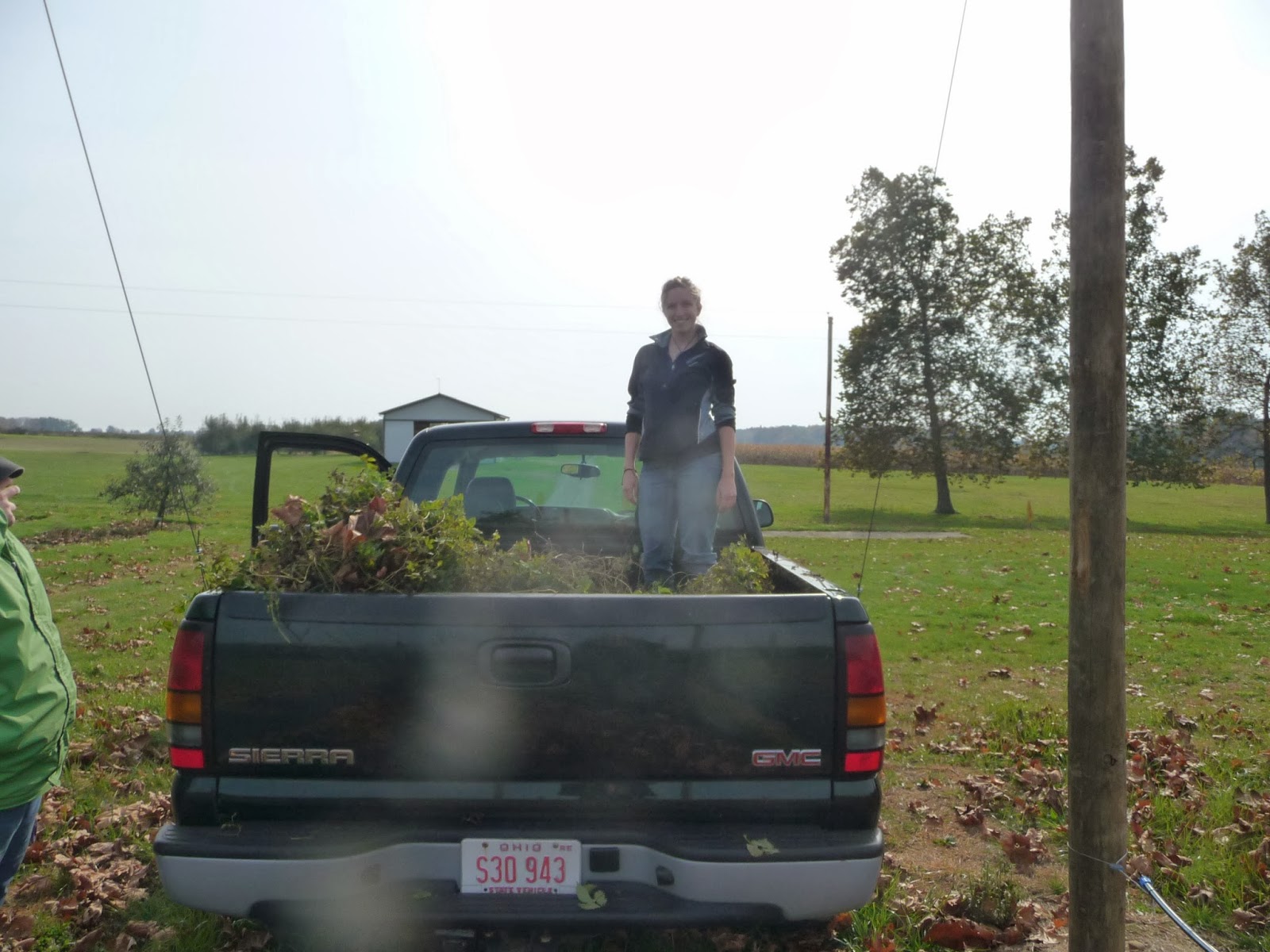

Many growers will cover their hop plants with mulch or compost after cutting them back.  This is supposed to help protect the crowns from freezes. We decided to go mulch free to find out how that method would work for Ohio hop growers.


Monday, September 9, 2013

Emerging from the field!

You might have noticed a lack of posts recently! Here at the ALE lab we have been busy collecting data and samples from the field, driving miles and miles, planning and conducting field days, trying to avoid bee stings, and maintaining our sanity!

We have tons of great information to share with you from the summer which will trickle out in the form of various blog posts. For now we will leave you with some pictures highlighting our summer activities.

We held two workshops for the Buckeye Lady Beetle Blitz Program (BLBB)

Scott started some exciting experiments which involved tracking the movements of bumble bees.

Our hops grew tall...

...and we had a larger yield than expected!

Andrea's first field season was a success.

Our undergraduate intern, Denisha, conducted her project in Cleveland

We had a great canoe trip with the Herms lab.

We had 80 people attend our Hops Production Field Day in Wooster!

Wednesday, June 12, 2013

Andrea's field work has begun!

Hello everybody!  My last post was way back in the fall when I joined the ALE lab as a new Masters student.  Things have been going great and I now have a project in the works.  I am interested in how landscape composition and management practices affect the natural enemies found in vegetable crops, specifically sweet corn and summer squash.  I am also sampling for long-legged flies (a type of predatory fly that is rather ubiquitous) to see if they can be a bioindicator group of the natural enemies in agroecosystems.


A long-legged fly (Charles Ray, Auburn University; Bugwood.org):


And now that summer is here, field work is officially under way!  I spent last week deploying traps at 16 field sites throughout northeastern Ohio.  The three types of traps I am using are pitfall traps (a cup of water in the ground with soapy water to keep the critters from crawling back out):


.... white pan traps (flies are particularly attracted to white):


... and yellow sticky traps (flying insects are attracted to the yellow card and get stuck in the sticky goo on the surface of the card):


 These three traps are clustered together at four plots within the crop:


This week I am going around to my sites again to gather the traps up and see what types of insects I caught.  Hopefully I got some interesting stuff; I shall keep everyone posted!

Friday, May 31, 2013

Hops yard progress...

All the posts are set, and our top wires have been installed!
 All that we have left for trellis construction is the bottom wire and the twine for climbing. The hops are certainly ready for some vertical growth.

Tuesday, May 21, 2013

Hops Update

We've made some good progress in our Wooster hops yard.
 Most of the plants have leaves...
...and some of the plants are just emerging now.

The construction of our trellis system has started as well!

Holes have been dug...
...and posts have been "planted".


Thursday, May 9, 2013

Hops yard progress: Rhizome planting in Wooster

Step 1: Mark the plots clearly. Rhizomes of different varieties look similar, and the last thing you want to do is mix them up. A good start is knowing exactly which varieties will go where before you even take the rhizomes out of the cooler.

Step 2: If you use landscape fabric (for weed control), burn holes with a torch.

Step 3: Grab your (well organized and labeled) rhizomes!

Step 4: Start planting! We followed the methods demonstrated in this video:

  
Step 5: Watering: Give them a generous amount of water. We gave each rhizome 1 liter, and also considered the fact that it was going to rain later in the day. Keep an eye on them; you should not let the soil dry out, but too much water can be detrimental for rhizomes you are trying to establish.

THANK YOU THANK YOU THANK YOU to the graduate students (Jake, Liz, and Doug) who volunteered their time to help us get the hop yard planted!


Now it's time for the waiting and watering game...many more updates to come!


Thursday, April 18, 2013

Hops Yard progress

Preparation of the sites for our hops yards is well underway! Piketon has had better luck with the weather. They have constructed their beds, and laid the ground fabric down.


Here in Wooster we are a little further behind, but making progress!


Thursday, April 4, 2013

Hops project is a go!

Piketon broke ground for their hops yard today. We are very excited to see this project finally starting! 

Posts have arrived!


Yep! Soil loos good!


Friday, September 7, 2012

Done with fieldwork...

The ALE lab is done collecting data for the summer and fall is almost here!


The end of summer doesn't mean we get to slow down though! It's time to sort our samples, run statistical analyses, and complete everything we have be putting to the side for the past four months. There is much to do!

Keep checking our blog for updates about our findings, conferences we attend, news about current and future projects, and anything else the ALE lab wants to share with you!

Thursday, August 30, 2012

The Semi-great Pumpkin Harvest!

Ben and I spent the past two days counting and harvesting his pumpkins...


If you need some pumpkins counted give us a call. We are experts.