Thursday, November 15, 2012

ESA is over.

ESA has ended and we are back at our offices to a pile of unanswered emails, papers to be written, and plans to be made for future projects.

We are very excited and proud of the FIVE graduate students from the Entomology Department at Ohio State University for awards they earned in their sections!

Lawrence Long: 1st place  (Emerald ash borer (Agrilus planipennis) induced tree mortality alters forest bird communities)
Priya Rajarapu: 1st place (Midgut-specific profiles of the emerald ash borer larvae (Agrilus planipennis Fairmaire)
Doug Sponsler: 1st place (Influence of urbanization on the survival and productivity of honey bee (Apis mellifera) colonies in an agricultural region)
Jake Wenger: 2nd place (Origins of virulence: A molecular investigation of the genetic relationship among avirulent and virulent soybean aphid biotypes)
Nathan Baker: 1st place (Histopathological effects of the cyanobacterial toxin, Microcystin-LR on the exposed epithelial tissues of the amberwing spreadwing damselfly, Lestes eurinus, and the bloodworm, Chironomus riparius.)

Ohio State tied with Penn State, Texas A&M, and Nebraska for the most awards. Please be sure to congratulate these students if you see them.

Four members of the ALE lab also presented research. (listed below):

Mary Gardiner: Lessons from lady beetles: Accuracy of monitoring data from US and UK citizen science programs
Caitlin Burkman: Land use change affects spider community structure in the urban ecosystem of Cleveland, Ohio
Ben Phillips: Quantifying the influence of landscape composition on the pollination service supplied to pumpkins (Cucurbita pepo) in Ohio
Chelsea Smith: Predator guilds attacking coccinellid eggs vary among egg mass species and across foraging habitats

Tuesday, November 13, 2012

ESA still happening.

We are still having a great time at ESA! The students are selling goods to raise funds for themselves....

Some OSU men manning the EGSA booth
Scott, MSU student Brett, and Caitlin are ready to stop selling t-shirts

The Ohio State Entomology Department has a great mixer where we could visit each other  talk to alumni, and spend time with friends!

Emily and Scott at OSU mixer
Yuting, Erin, Priya, and Samuel at OSU mixer

Monday, November 12, 2012

ESA adventures.

We are all staying busy viewing posters, watching presentations, and networking!

Scott questions a Penn State student about her bumble bee research
We are also finding time for the occasional adult beverage.

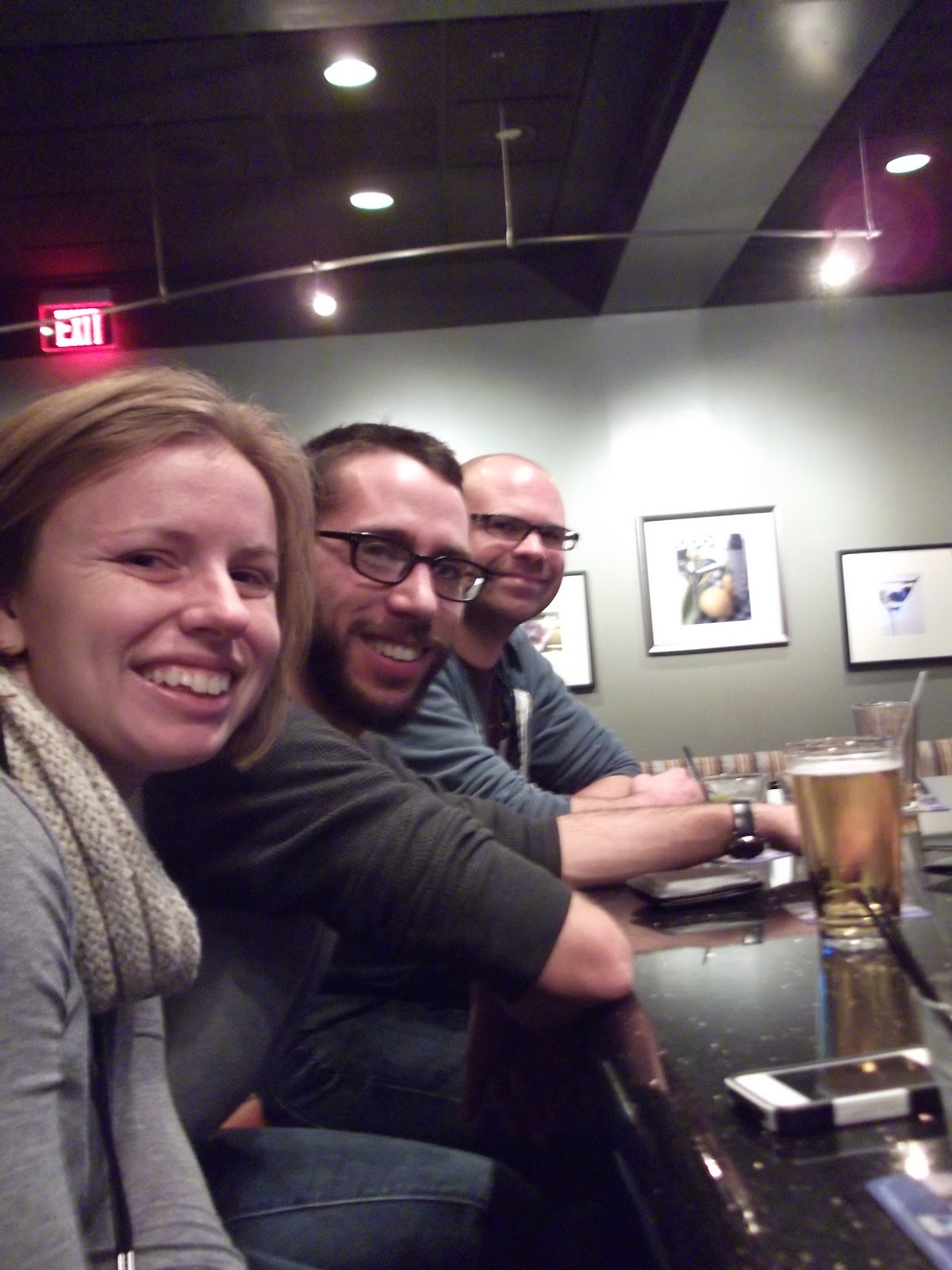
Emily, Ben, and Scott enjoying a beverage (or 2)

Sunday, November 11, 2012

ESA!

We have arrived in Knoxville for the Annual Entomological Society Conference. There is much to do! Mary is speaking today and the students have their talks tomorrow.

Best of luck to all the OSU graduate students who are competing in the student competition!

Wednesday, November 7, 2012

Ben Phillips Wins DeLong Award!


The Ohio State University Entomology department held it's DeLong award competition yesterday afternoon, an event that takes place every year before our national meeting (ESA). It not gives the students a chance to practice their presentations for ESA, and provides travel money to the winners! 

Today we found out that an ALE lab graduate student, Ben Phillips, won the first place award! 


The judges were very pleased with the quality of the student presentations, and could not decide on second place. The second award was split equally between Jacob Wenger (Michel Lab) and Larry Long (Herms Lab).

Congratulations Ben, Jake, and Larry!!


Monday, October 29, 2012

Sample sorting

Field season has come and gone, leaving us graduate students with many samples to sort and identify. We also have a few undergraduates helping us out, possibly reconsidering their life choices as they do so.

I collect spiders in my field sites primarily with pitfall traps.

Soapy water breaks the surface tension, drowning anything that falls in :(
After leaving those out for 7 days and collecting oftentimes an obscene amount of arthropods, we store the samples for later sorting.


Next, the spiders need to be sorted out from the rest of the gunk. To reduce the amount of such debris, I recommend using some sort of trap cover while it's in the field.

Spiders, ants, beetles, etc. set aside on the left.
The use of a microscope is necessary for spiders - some are surprisingly tiny!

Camera pic, apologies for the blur.
Those little blobs to the left of the big orange spider? Yup, each a spider. Ants are on the right side of the photo for size reference. The big orange one by the way is Dysdera crocata: The Woodlouse Hunter (my future movie title), an exotic species from Europe which has made its way around much of the world.

Finally, I can actually identify the specimens. It takes time and repeated efforts to learn how to identify a spider to even just family, but I'm now pretty quick at identifying to genus. In the future, I may write a post about how to identify spiders, but for now here are some good links:

http://www.cirrusimage.com/spider.htm

http://www.arachnology.org/Arachnology/Pages/Identification.html


Friday, September 21, 2012

Insect in the Spotlight: Beech Blight Aphid

The beech blight aphid (Grylloprociphilus imbricator) can be commonly seen this time of year on American beech trees. This species of woolly aphid forms dense colonies on the branches and leaves of the trees. Last weekend they were very noticeable at Wooster Memorial Park where we were hiking. At the time I was not sure what species of aphid they were and we kept ourselves amused for some time poking and shaking the branches to watch the aphids "dance". What we were actually observing was defensive behavior in which they raise their abdomen and sway from side to side when disturbed.

(c) Joe Boggs ( http://bygl.osu.edu/content/return-engagement-boogie-woogie-aphid-0 )
Check out the video posted below (source: YouTube):


These aphids are not a significant risk to the health of the tree, and often deposits of sooty mold will form where the aphids have left honeydew behind.

Sources: bygl.osu.eduextension.umass.eduwikipedia.org