Friday, April 26, 2013

2013 OARDC Annual Research Conference

Yesterday was the 2013 OARDC Annual Research Conference which gives faculty students, and staff a chance to gather and talk about the research that we have all been busy with!

The ALE lab was represented by two posters:

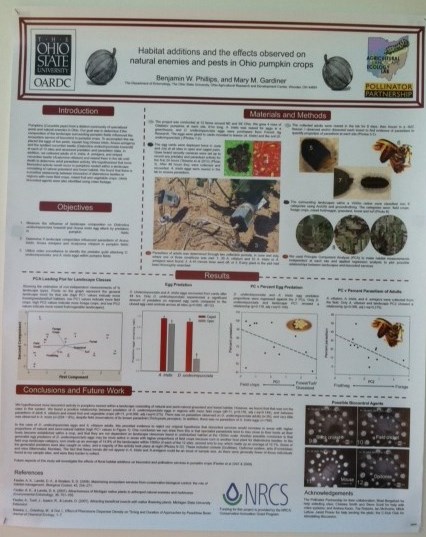
Ben presented his findings regarding predation and parasitism of pests in pumpkin fields across Ohio

Chelsea presented her finding regarding predation of native and exotic lady beetle eggs in alfalfa, grassland, and soybean habitats.


Thursday, April 18, 2013

Hops Yard progress

Preparation of the sites for our hops yards is well underway! Piketon has had better luck with the weather. They have constructed their beds, and laid the ground fabric down.


Here in Wooster we are a little further behind, but making progress!


Wednesday, April 17, 2013

Bugs World at OARDC!

Today and tomorrow is A Bugs World at OARDC! A Bugs World is a two-day interactive learning experience for elementary school students. There are many different sessions which are organized by members of Ohio State's entomology department and some other departments as well. We developed a program to teach school children about the diversity of lady beetles and their life cycle.


We always have a great time with the students!

Monday, April 15, 2013

Insect of the week!

Recently a retired OARDC-Entomology staff member, Bill, brought in a mystery insect which he suspected might be a lady beetle. He found them aggregated on some logs near his home.
Specimen: Found aggregated on logs in NW Ohio
Upon closer inspection of the beetle, the antennae looked too long and it was clear this was not a lady beetle.  All we could tell Bill at the time was that this was not a lady beetle, but it was perhaps a mimic. With that limited information Bill researched and found the species name before members of the ALE lab even had a chance!

This species, Endomychus biguttatus, is a member of the Handsome Fungus Beetle family (Endomychidae). It feeds on fungus which may explain why it was discovered on a log pile. Below is a much better image of this species, which clearly shows the long antennae and a pronotum without the spots which are normally present on lady beetles.

www.billjohnsonbeyondbutterflies.com
It is easy to see how this insect could be confused for a lady beetle, the color and shape of the wing covers are very similar to some lady beetle species, pictured below:
The Columbus Dispatch
Great detective work Bill!

Sources:
Bugguide.net
www.billjohnsonbeyondbutterflies.com

Thursday, April 4, 2013

Hops project is a go!

Piketon broke ground for their hops yard today. We are very excited to see this project finally starting! 

Posts have arrived!


Yep! Soil loos good!


Wednesday, April 3, 2013

ALE Lab Publication


ALE Lab was published! The article titled: Vacant land conversion to community gardens: influences on generalist arthropod predators and biocontrol services in urban greenspaces, was published in Urban Ecosystems over the weekend.

Abstract: Due to economic decline and the recent rise in home foreclosure, many U.S. cities are faced with managing large acreages of vacant land. Interest in local food production on this land has the potential to dramatically reshape the composition of greenspace found within urban landscapes. This study examined how the conversion of vacant land to urban gardens and farms influenced arthropod generalist predator populations and their ability to support biocontrol services. We found that the abundance of Coccinellidae and Syrphidae, and the activity density of Carabidae, Formicidae, and Lycosidae were equivalent among vacant lot and urban garden sites. Dolichopodidae abundance and the activity density of Linyphiidae and Opiliones were reduced in urban gardens whereas Anthocoridae abundance and the activity density of Staphylinidae were greater within urban gardens relative to vacant lots. The biocontrol service supplied by generalist predators was measured using sentinel eggs (Helicoverpa zea (Noctuiidae)) and pupae (Sarcophaga bullata (Sarcophagidae) and Musca domestica (Muscidae)).We found no difference in the biocontrol of H. zea eggs or M. domestica pupae among the focal greenspaces. We found no difference in the removal of S. bullata pupae by predators in June 2010, whereas in August 2010 a greater proportion of pupae were removed in urban garden sites relative to vacant lots. Based on these findings, we discuss the potential of the urban landscape to support generalist predators and sustainable urban gardening and farming.
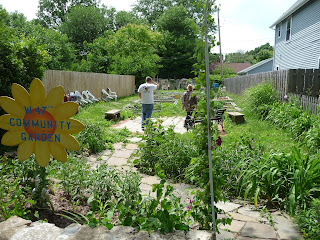
Urban Garden
Urban Garden
Urban Garden
Vacant Lot
Vacant Lot


Tuesday, April 2, 2013

Google celebrates birthday of naturalist Maria Sibylla Merian

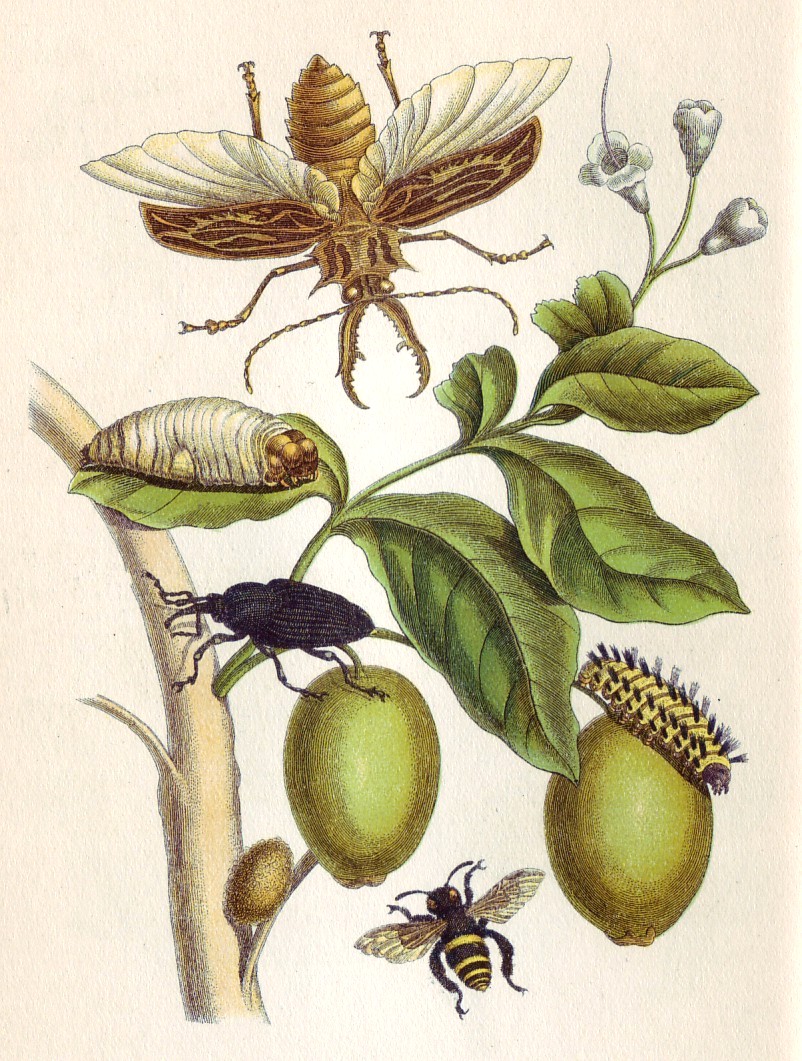
Today the Google Doodle is celebrating the 366th birthday of Maria Sibylla Merian, a naturalist and artist who studied insects and plants. Some of her entomological artwork is below:


(more at the source: Wikipedia)

Souces:
Google.com
Article: Huff Post